
Strength training can support swim, bike and run performance, but only when it fits around the work that matters most. The practical aim is to build force and resilience without turning every week into a struggle between tired legs and key endurance sessions.
There is no single perfect timetable for every triathlete. Training history, race distance, strength experience, work commitments and recovery all change the answer. Use the process below to protect session quality and adjust from what actually happens in your week.
What concurrent training really means
Concurrent training simply means developing endurance and strength within the same programme. Research shows that athletes can improve both. The potential “interference effect” is not a rule that lifting ruins endurance or endurance ruins strength; it describes how adaptations may be reduced when volume, fatigue and session placement are poorly managed.
Reviews of endurance athletes generally support adding well-designed strength work, while also showing substantial variation between sports, participants and methods. Running studies are more numerous than swimming and triathlon studies, so findings should not be copied across every discipline without judgement.
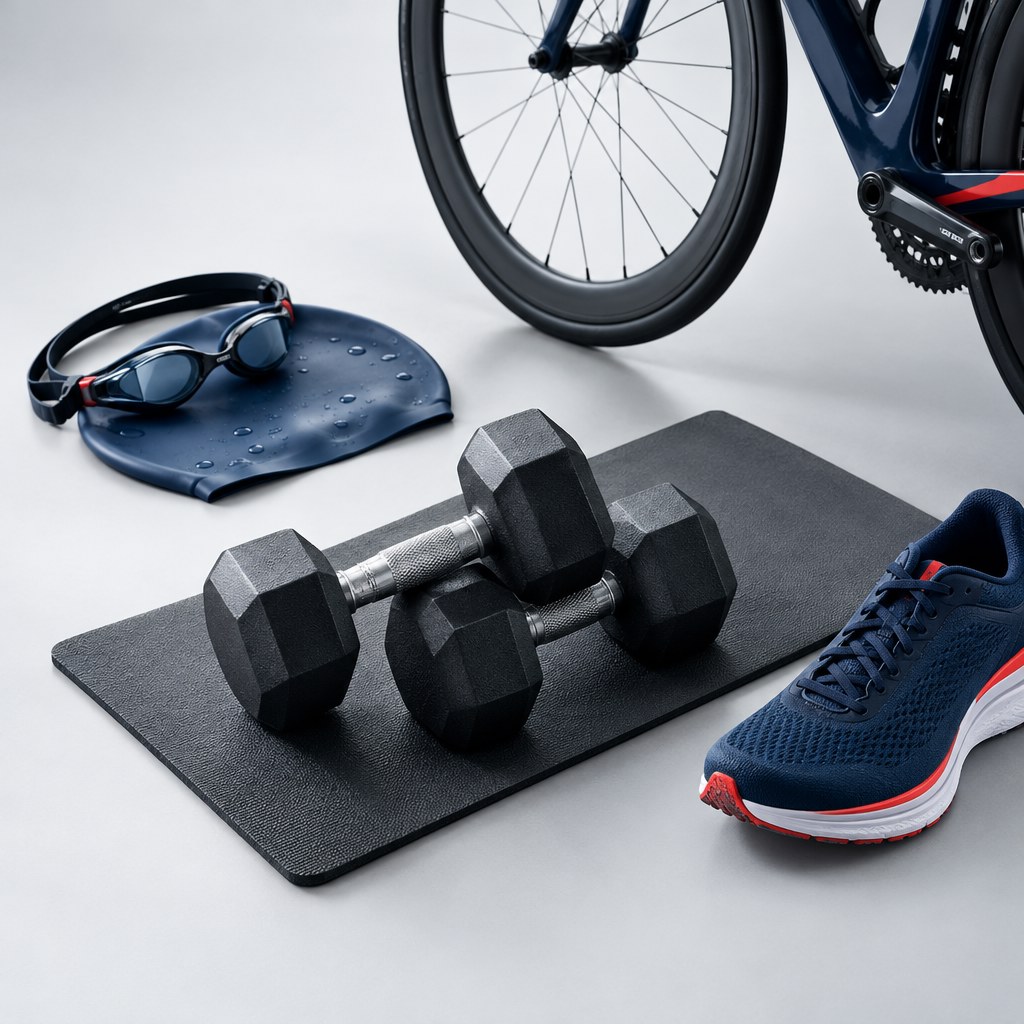
Start with the sessions that decide your week
Enter races, the long ride or run, demanding intervals and technically important swim sessions first. Then place strength where it is least likely to lower the quality of those priorities.
| If the priority is… | Protect it by… |
|---|---|
| A key run or bike interval session | Avoiding unfamiliar or high-volume lower-body lifting immediately beforehand |
| Strength development | Lifting while fresh, then placing easier endurance later if two sessions share the day |
| Swim technique | Avoiding heavy upper-body fatigue before a technique-focused session |
| Race-specific endurance | Reducing unnecessary gym volume while retaining familiar strength exposure |
Does the order of two sessions matter?
It can matter for the quality of the session you perform second, but the long-term evidence is less absolute than many social posts suggest. A 2018 meta-analysis found a benefit for resistance-before-endurance ordering for lower-body dynamic strength, but not for several other outcomes. A 2024 review of 15 randomised studies involving 426 participants found only small and inconclusive sequence effects for endurance performance.
That leads to a useful coaching rule: when two sessions must share a day, complete the session linked most closely to your current goal first. If endurance performance is the priority, do the key endurance work before strength. If strength or power is the priority, lift first. Allow several hours between demanding sessions when your schedule permits, while recognising that research does not identify one universal separation time for every athlete.
An illustrative triathlon week
This is a fictional planning example, not an individual prescription.
| Day | Training emphasis | Reason |
|---|---|---|
| Monday | Easy swim + strength | Low-impact endurance paired with controlled lifting |
| Tuesday | Key run | Fresh legs for the priority session |
| Wednesday | Z2 extensive aerobic bike + swim | Aerobic volume without another heavy leg stimulus |
| Thursday | Key bike, strength later | Bike quality comes first; gym volume stays controlled |
| Weekend | Long endurance sessions | No new heavy lifting immediately beforehand |
Use the Endurance Lab training zones guide and RPE guide to keep easy work genuinely manageable. This example names Z2 as extensive aerobic work; it does not invent percentage boundaries.
Choose a strength dose you can repeat
For many endurance athletes, one or two focused strength sessions each week is a practical coaching starting point, not a universal minimum. Prioritise a small number of well-executed movements, progress load gradually and stop adding exercises when soreness begins to disrupt sport-specific training.
- Use challenging loads with sound technique rather than turning every lift into a maximal test.
- Keep plyometric volume modest and progress only when landings remain controlled.
- Reduce sets before removing all strength when endurance volume rises.
- Track whether the next key swim, bike or run remains repeatable.
Adjust the plan when fatigue stops being productive
Normal training fatigue should settle. Change the week when leg heaviness keeps worsening, technique deteriorates, sleep and motivation decline, or several priority sessions underperform. First reduce strength volume, remove unfamiliar exercises and move lifting away from the affected session. Persistent pain or unusual fatigue warrants assessment by an appropriately qualified healthcare professional.
Frequently asked questions
Should I lift before or after an easy session?
Either can work. Put the session most important to your current goal first and judge the pairing by the quality of both sessions and the following day.
Should strength always be on hard endurance days?
Not always. Grouping stress can create clearer easy days, but the combined day may become too demanding. Your work schedule, experience and response should decide.
What changes during race-specific training?
Keep familiar strength exposure while reducing unnecessary volume. The aim is to retain useful qualities without compromising the endurance work closest to race demands.
Research and limitations
- Berryman N et al. Strength training for endurance performance. Sports Medicine. 2018. doi:10.1007/s40279-018-0902-8. Review populations and methods varied.
- Blagrove RC, Howatson G, Hayes PR. Strength training and distance-running determinants. Sports Medicine. 2018. doi:10.1007/s40279-017-0835-7. Running evidence should not be assumed to apply identically to swimming or cycling.
- Eddens L, van Someren K, Howatson G. Intra-session exercise sequence and the interference effect. Sports Medicine. 2018. doi:10.1007/s40279-017-0784-1. Ten studies in healthy adults; only some outcomes favoured one order.
- Vikestad V, Dalen T. Strength and endurance training sequence on endurance performance. Sports. 2024. doi:10.3390/sports12080226. Fifteen randomised studies; sequence effects were small and inconclusive for endurance outcomes.
Build strength around the sessions that matter
Endurance Lab coaching coordinates swim, bike, run and strength around your goals, availability and recovery.