
Marathon recovery should be guided by how you are responding, not by a fixed rule that every runner must rest or run on the same day. Restore normal movement and energy first, test short easy activity, then rebuild frequency and duration before bringing back demanding intensity.
This guide assumes an uncomplicated race. It does not provide medical clearance after injury, illness, collapse, chest symptoms or unusual pain.
Why feeling less sore is only one signal
A marathon creates muscular, metabolic and neuromuscular fatigue at the same time. Soreness can improve while other measures are still changing, and blood markers can remain elevated after normal movement feels better. Recovery also differs with race effort, training history, sleep, fuelling, environmental conditions and injury history.
One study of 11 recreational runners found that several aerobic performance measures were broadly recovered seven days after a marathon and that soreness was no longer clearly different from baseline between days four and seven. That small group cannot provide a universal timetable, but it shows why a runner can feel and perform differently across the first week.
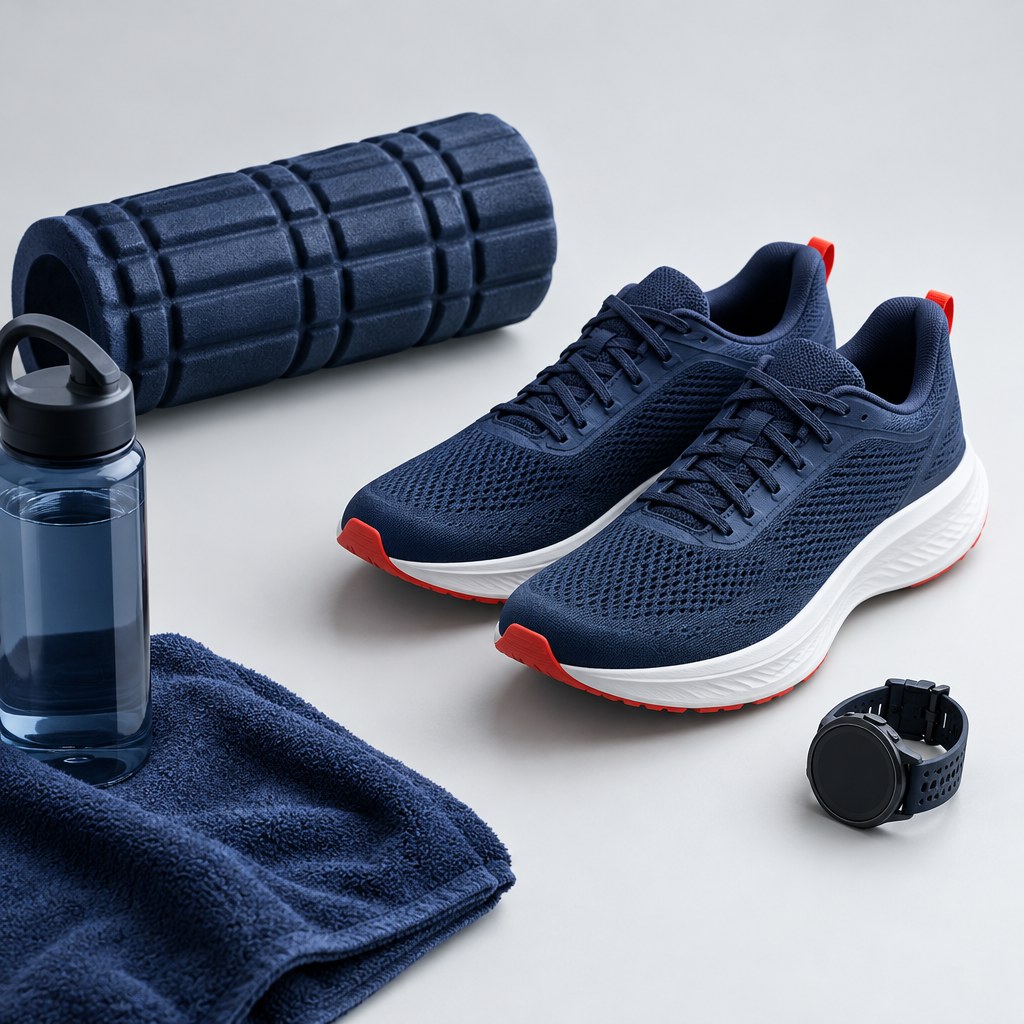
A signal-led return instead of a countdown
| Stage | What to check | Possible next step |
|---|---|---|
| Restore normal daily movement | Walking, stairs, appetite, hydration and sleep are improving | Comfortable walking and ordinary daily activity |
| Test easy activity | No swelling, worsening focal pain or altered movement | Short Z1 recovery or Z2 extensive aerobic activity if appropriate |
| Review the response | No meaningful setback later that day or the following morning | Repeat before extending duration |
| Rebuild training | Easy sessions feel normal across several exposures | Add frequency, then duration, then a small dose of intensity |
The table is an editorial coaching framework. It deliberately avoids assigning one mandatory day to each stage. Endurance Lab zone names are used without inventing percentage boundaries; see the training zones guide and RPE guide.
What should the first run look like?
Treat it as a check, not a workout. Choose a flat, familiar route and keep the effort easy enough to stop without feeling that you failed a session. Twenty minutes may be plenty for one runner and inappropriate for another; movement quality and the next-day response matter more than completing a round number.
A randomised study of 64 marathon finishers compared moderate running, elliptical training and rest during the following week. Beginning moderate exercise at 48 hours did not worsen the measured muscle-damage recovery in that cohort, and running was associated with better squat-jump recovery at one time point. The participants were experienced enough to finish in about three hours thirty-five minutes on average, and the finding does not mean every runner should resume after two days.
Rebuild one variable at a time
- Frequency: establish a few short, comfortable sessions before trying to restore your full routine.
- Duration: extend only when the shorter session produces no meaningful setback.
- Intensity: reintroduce Z3 intensive aerobic work and higher zones after easy running and normal daily energy have stabilised.
- Long-run demand: rebuild gradually rather than using one long run to prove recovery.
Cyclists and triathletes may use easy swimming or cycling to maintain routine, provided the activity does not aggravate symptoms or become a hidden hard session. Reduced impact does not automatically mean low physiological stress.
Recovery products cannot replace readiness
Sleep, regular meals, fluids and manageable movement are the foundation. A 2024 umbrella review examined 22 reviews covering 63 studies and 1,100 endurance athletes. It found no single recovery strategy with consistent benefits across the evidence. Compression garments and cryotherapy showed some positive findings, while results varied and the available recovery time-course data were limited.
Massage, cold water, compression or mobility work may change how you feel. That can be useful, but a temporary reduction in soreness should not be treated as proof that tissues and performance are fully restored.
When to stop and seek assessment
Do not use this progression for chest pain, fainting, breathing difficulty, dark urine, marked swelling, worsening localised pain, fever, significant weakness or symptoms that fail to settle. Seek appropriate medical assessment. Pain that changes your gait or becomes more focused as general soreness fades also deserves attention.
Frequently asked questions
Should I avoid running for a full week?
Not automatically. Some runners are ready for a short easy test earlier; others need longer. Use movement, energy and the 24-hour response rather than one calendar rule.
Can I use my normal easy pace?
Use effort first. Your usual pace may require more effort after the race. Slow down or stop if movement changes or effort rises unexpectedly.
When can intervals return?
After easy running feels normal across several sessions and normal energy and movement have returned. Begin with a smaller dose than your pre-race session.
Research and limitations
- Peake JM et al. Muscle damage and inflammation during recovery from exercise. Journal of Applied Physiology. 2017. doi:10.1152/japplphysiol.00971.2016. Broad exercise-damage review; it does not prescribe a marathon timetable.
- Takayama F et al. Aerobic fitness and performance one week after a marathon. 2017. doi:10.1155/2017/9402386. Eleven recreational runners; small sample.
- Martínez-Navarro I et al. Running, elliptical training or rest during the week after a marathon. European Journal of Sport Science. 2021. doi:10.1080/17461391.2020.1857441. Sixty-four finishers; specific exercise intensity and participant profile limit generalisation.
- Li S et al. Recovery strategies after training and competition in endurance athletes. Sports Medicine – Open. 2024. doi:10.1186/s40798-024-00724-6. Umbrella review; evidence and protocols varied.
Plan your return around your response
Endurance Lab coaching can help you rebuild training around your race history, current goals and weekly capacity.